Sicilian Steamship Company Founding
The Florios of SicilyThe Sicilian Steamship Company Founding marks the moment when a commercial plan becomes a signed enterprise and a public test of faith in change. Celebrated at a dinner hosted by Giulia Portalupi Florio, the company brings together Vincenzo Florio, Benjamin Ingham, Palermo businessmen, and aristocrats. Its steamship, the Palermo, stands for more than a new vessel: it prompts a debate over risk, expertise, and whether Sicily can acquire the skills to operate and maintain modern machinery.
The occasion and its public face
The company’s birth is celebrated at Giulia’s first dinner party as hostess. She prepares the house for a demanding evening: the table linen is immaculate, silver gleams, food is kept warm, and champagne, cigars, and liqueurs are ready for the guests. The scale of the occasion unsettles her. She has moved from a life in the shadows into the household of a man whose public dealings bring him into contact with the realm’s most influential businessmen and titled families; the dinner makes her feel that she must prove she can carry her share of the responsibility as a Florio.
The party is a business gathering as much as a domestic event. The guests include leading Palermo merchants and aristocrats, and Giulia’s work enables the men’s meeting to take place in a carefully ordered home. When the women withdraw, Vincenzo remains with the men to discuss the venture. The company’s creation thus appears in two linked registers: Giulia’s effort to perform the duties of her new public position, and the negotiations and disagreements through which the enterprise is secured.
Signing and celebration
Benjamin Ingham arrives with Vincenzo, both visibly pleased after their meeting. He calls it a historic day and says that progress has finally reached Sicily. At the door, Giulia welcomes them and asks whether the meeting was fruitful. Ingham confirms that everything has been signed and sealed and that the shares have been paid: the Sicilian Steamship Company is now a reality. His enthusiastic greeting of Giulia makes the announcement part of the household’s celebration as well as a report on a completed transaction.
The gathering also connects commercial advancement with social rank. Among those entering is Alessandra Spadafora, Duchess of Santa Rosalia, Ingham’s wife since 1837. Her marriage has made him an accredited member of the aristocracy. The duchess is courteous to Vincenzo and warm toward Giulia; both women have been mistresses, but their shared experience does not erase the difference between Giulia’s merchant background and the duchess’s aristocratic birth. The new company is therefore celebrated in a setting where business alliances and inherited status meet, without becoming the same thing.
Steam, risk, and expertise
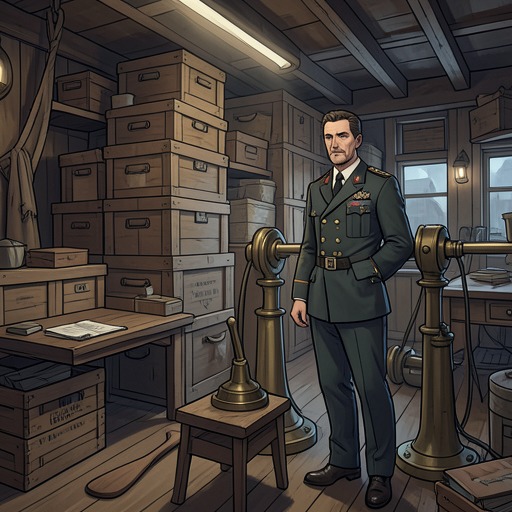
After the women leave, Carlo Giachery joins Vincenzo and Ingham. Their conversation turns to the Palermo, which Ingham insists is a steamship, not an ordinary sailing vessel. Gabriele Chiaramonte Bordonaro raises a practical objection: if the engines fail, Sicily lacks people who know how to repair them. He asks whether British mechanics will accompany the ship, noting that local ship carpenters cannot be assumed to have the necessary expertise.
Ingham answers that British mechanics will come to teach local people both to repair the engines and to build them. He frames the decision as a choice between taking risks and allowing nothing to change, and points out that he and Vincenzo hold the largest share of the company without expressing the same anxiety. Chiaramonte replies that traders bear risks without the protection of an influential family name. The exchange exposes a tension within the partnership: the project requires confidence and new technical knowledge, while those committing capital remain conscious that their social standing may not shield them from failure.
A venture made into a commitment
The prince of Trigona rebukes Chiaramonte’s resistance. If the other partners have joined the venture, he argues, it is because the future will not wait and caution must give way to attention to the present. Vincenzo answers by raising his glass to the future and to their enterprise. The guests clink glasses and shake hands, turning the company’s legal and financial completion into a visible pledge among its participants.
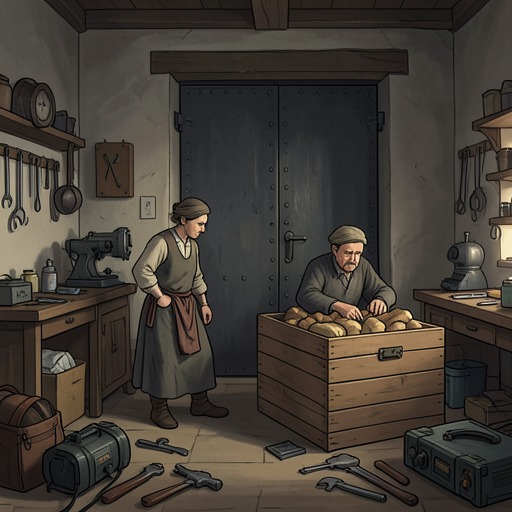
The toast becomes one of the details Vincenzo carries in memory: the engines, the work store, the mechanics. The recollection gives the founding an afterlife beyond the evening itself. What began with signed shares now contains the prospect of training, repair, and local capacity. The event’s significance lies not in proof that the steamship will succeed, but in the commitment to proceed despite uncertainty—and in the conviction, voiced by Ingham and endorsed by Vincenzo, that Sicily’s future depends on taking that risk.